Kubota UDT vs Super UDT2: How to Choose the Right Fluid

Kubota UDT vs Super UDT2: How to Choose the Right Fluid
You are standing in front of two oil containers, both carrying the Kubota name. One says UDT. The other says Super UDT2. The cheaper option is tempting, but the tractor has a hydrostatic transmission, and you would rather not find out the hard way that the fluids behave differently.
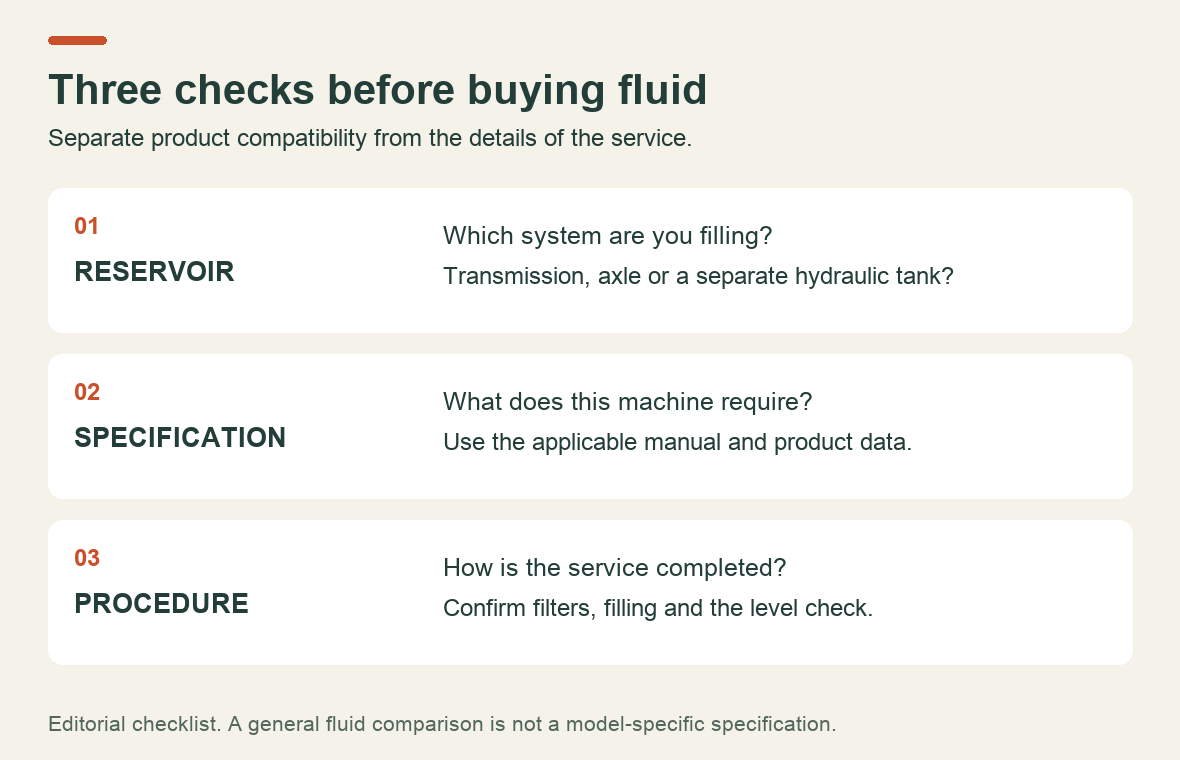
Start with the reservoir and the specification in your machine's manual. If it permits both products, compare their performance for your operating conditions. If it specifies one, do not turn a general compatibility statement into permission to disregard that instruction.
What is the difference between UDT and Super UDT2?
Kubota markets both as multipurpose tractor fluids. These products serve systems that can combine hydraulic operation with transmission lubrication and wet friction components. Super UDT2 is positioned for improved performance at high and low temperatures and smoother operation of wet clutches. Kubota also describes it as interchangeable with standard UDT and the older Super UDT. See the manufacturer's lubricant product descriptions.
For the buyer, that leaves two separate questions: “Is this allowed in my machine?” and “Which allowed product suits the work?” Answer them in that order.
| What you are deciding | What to look for |
|---|---|
| Whether either product is acceptable | The exact fluid wording in the applicable operator's manual |
| Whether Super UDT2 offers a useful advantage | Cold starts, operating temperatures and the manufacturer's stated performance benefits |
| How much to buy | The capacity for that reservoir and the service procedure, including filters |
| Whether an oil change is due | The model's maintenance schedule and your service record |
“Hydraulic oil” is too broad a shopping description
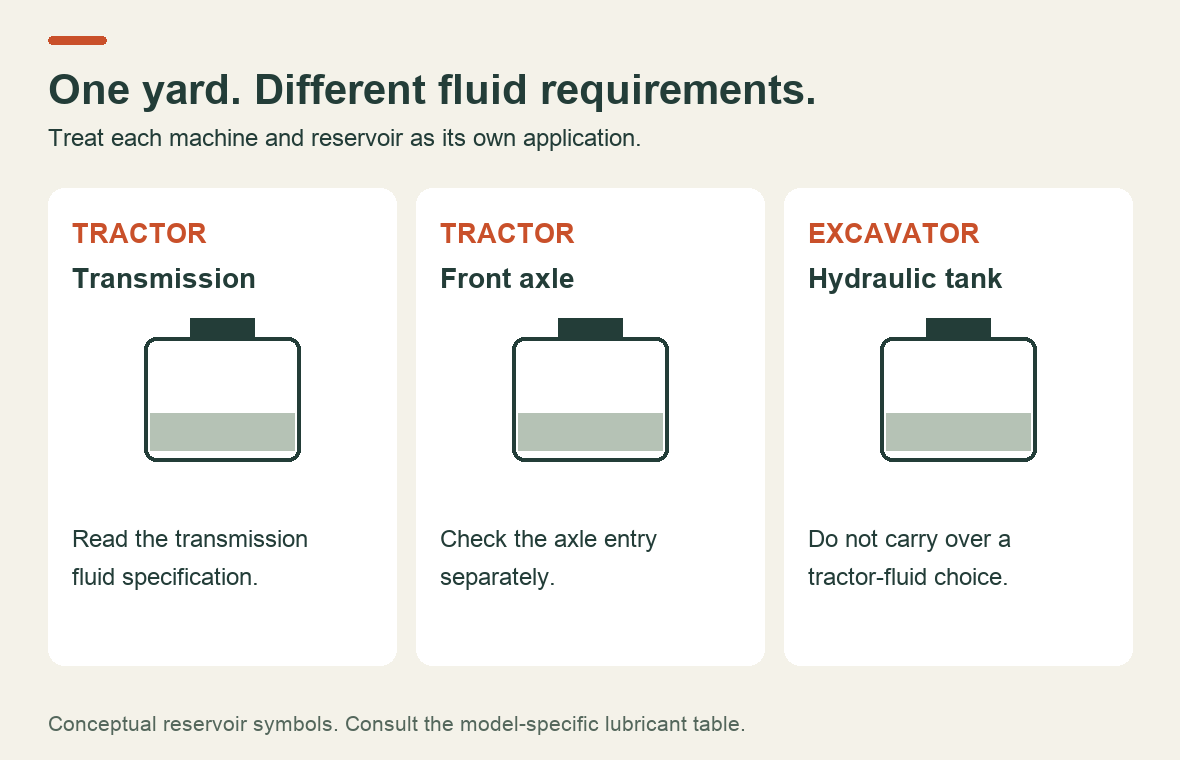
A tractor transmission and an excavator hydraulic tank are different applications. Kubota's maintenance table lists UDT or Super UDT2 for tractor transmission service, but gives separate hydraulic-oil grades for excavators and compact track loaders. It explicitly warns against using multifunction oils in Kubota excavator hydraulic systems. Check the Kubota lubricant maintenance table, then confirm the recommendation for your model and climate.
This matters if your yard contains, for example, an MX tractor and a U-series excavator. Buying fluid for the tractor does not establish what belongs in the excavator. Keep separate entries in the service record, even if you buy both oils on the same invoice.
The same discipline applies within one machine. Kubota's general table gives front-axle alternatives separately from transmission fluid. A front-axle recommendation therefore should not become a transmission recommendation just because both fill points are on the same tractor.
Can you mix UDT and Super UDT2?
Kubota's interchangeability statement supports compatibility between the named products in the intended applications. It does not identify whatever fluid a previous owner put in the machine, and it does not promise that a mixture will retain every performance benefit of an undiluted product.
For a routine top-up, first establish what is already in the reservoir and what the manual allows. If the service history is missing, write down that uncertainty instead of treating “probably UDT” as a specification. Ask the dealer how to proceed for that machine before adding an unknown substitute or starting an improvised flush.
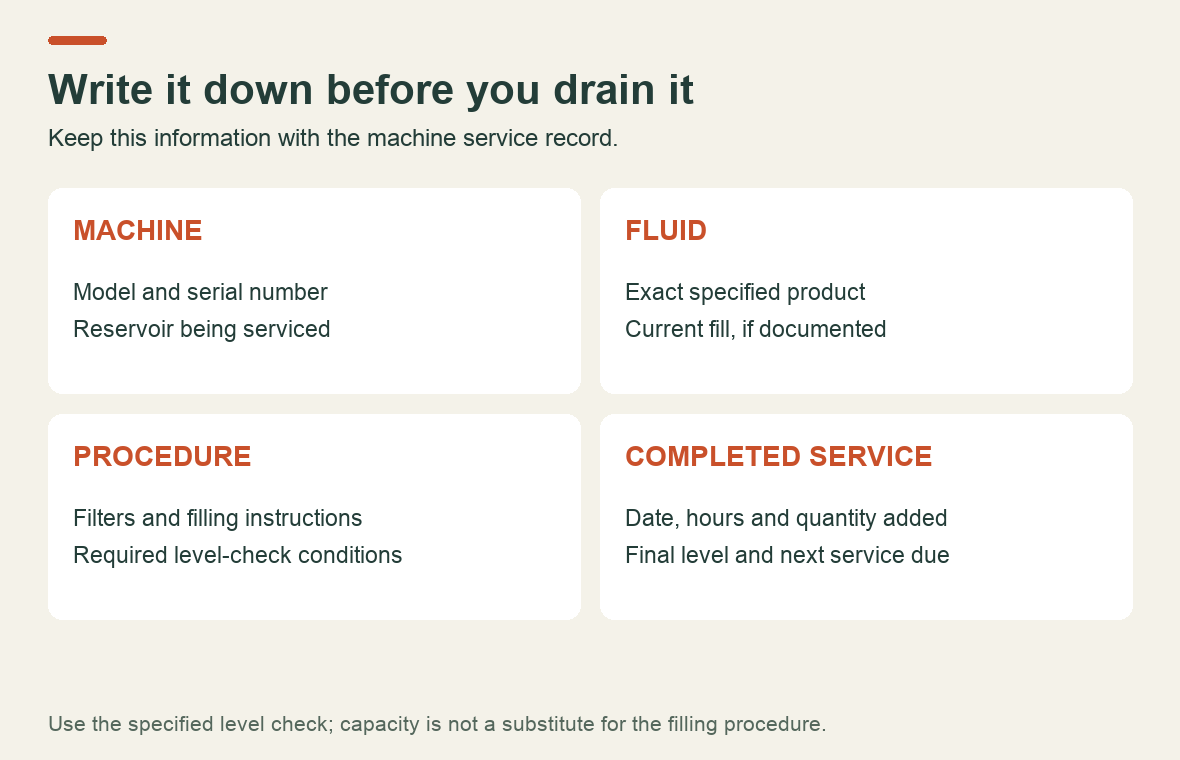
There is also a useful distinction between a low level and an oil change. Adding a small quantity does not reset the service interval. Record the product, quantity, date and hour-meter reading; investigate a level that keeps falling rather than repeatedly topping it up.
What about a cheaper “UDT-compatible” fluid?
Read the current technical data sheet, not just the front label. As an example of how these sheets are organized, Mobil's tractor hydraulic fluid information discusses transmission, hydraulic and wet-brake duties and lists performance claims separately from physical properties. This is a reading example, not a recommendation for your Kubota.
Ask the supplier to point to the exact application claim for the product being sold in your country. “Suitable for,” “recommended for” and an equipment manufacturer's approval are different claims; ask which one the documentation actually makes. A viscosity figure alone does not answer the entire application question.
If the only supporting evidence is a marketplace title or a seller saying “we put it in everything,” you still have a question to resolve. A small saving is hard to assess when you cannot establish what you are comparing.
Before you drain anything
Prepare a short job sheet. Include the model and serial number, the reservoir being serviced, the manual's fluid wording, the required filters, the specified level-check conditions and the maintenance interval. Leave space for the actual quantity added and the final level check.
Do not use the published system capacity as an instruction to pour that amount in without checking the level. Follow the filling and checking procedure for the machine. Likewise, do not copy the filter list or interval from a similar-looking tractor.
For an MX5400 or MX6000, the workshop manual listing on Byte Market includes maintenance, lubricants and hydraulic-system sections in its contents. Use those headings to check the scope before buying, and match the publication to your machine. For routine fluid selection, the applicable operator's manual is the first reference; workshop documentation becomes useful when a service turns into a diagnosis.
Two questions that often come up
Will Super UDT2 fix a noisy transmission? A product's stated performance benefits are not a diagnosis of your noise. Record when it occurs, the oil level and service history before deciding that changing brands or grades is the repair.
Should I change the fluid early just to switch products? Compare your current documented fill, the machine's condition and its service schedule. There is no single changeover interval that this comparison can justify for every Kubota.
Keep the final decision simple enough to write on the service sheet: this machine, this reservoir, this specified product. That note will be more useful at the next service than remembering which container looked familiar.
Recent Post
-
Why a Kubota Manual May N...
16 Sep, 2026
-
Kubota Tractor Won’t Star...
16 Sep, 2026
-

Kubota DPF Light Flashing...
18 Sep, 2026
-

Kubota Tractor Overheatin...
21 Sep, 2026
-
Kubota Hydraulic Couplers...
22 Sep, 2026
-
Kubota UDT vs Super UDT2:...
23 Sep, 2026