Kubota Excavator Track Tension: How to Check It Without Guessing
Kubota Excavator Track Tension: How to Check It Without Guessing
A rubber track looks slack, so you reach for the grease gun. But how much sag should it have, where should you measure it, and does the machine need to be in a particular position? Without those details, a tighter track can simply become an incorrectly adjusted track.
Use the clearance, measurement points and setup specified for your exact excavator and track type. A dimension copied from another machine is incomplete advice. This guide explains how to read the check correctly, using a documented U17-3 example, and when repeated loss of tension needs investigation.
Why tighter is not automatically better
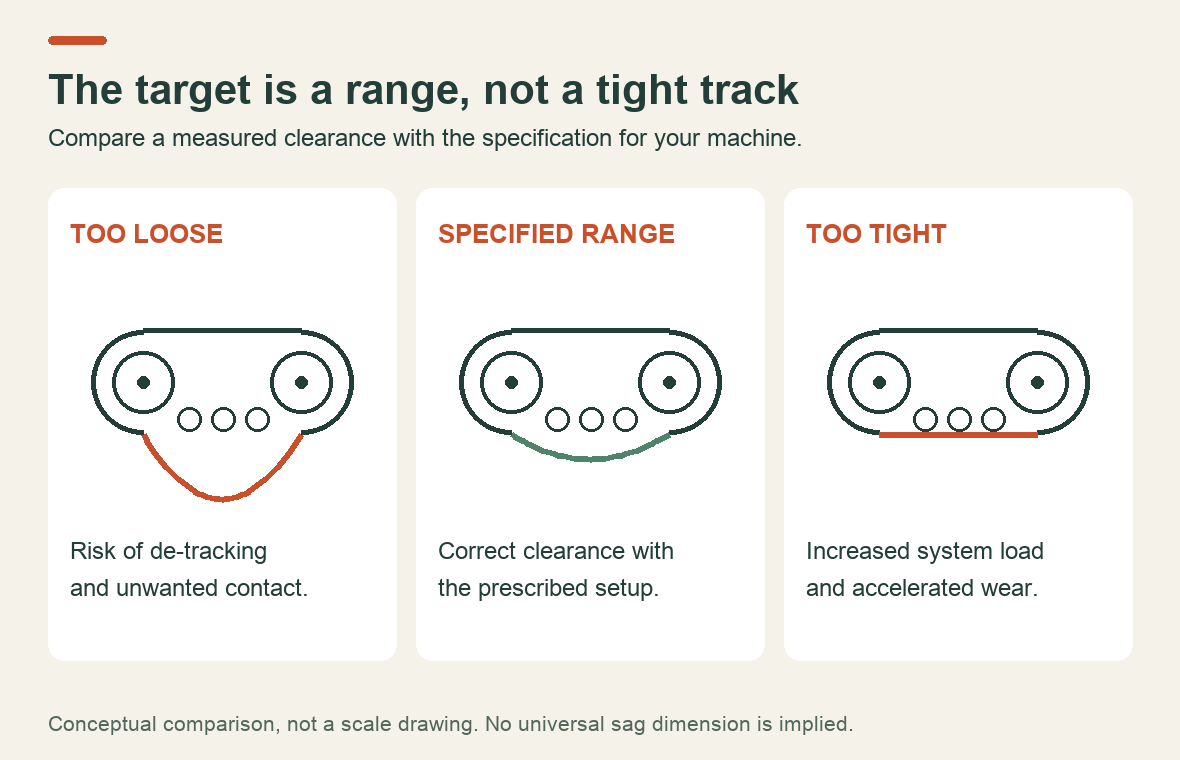
Camso's mini-excavator track installation and operation guide describes both sides of the problem: excessive slack raises the risk of de-tracking and unwanted contact, while excessive tension increases loading and wear across the system. It directs users to the machine manufacturer's tension specification.
For an owner, the target is therefore a measured range under stated conditions. “No visible sag” is not a maintenance specification. Neither is the number of grease-gun strokes used by the last operator.
A real example: the U17-3 measurement
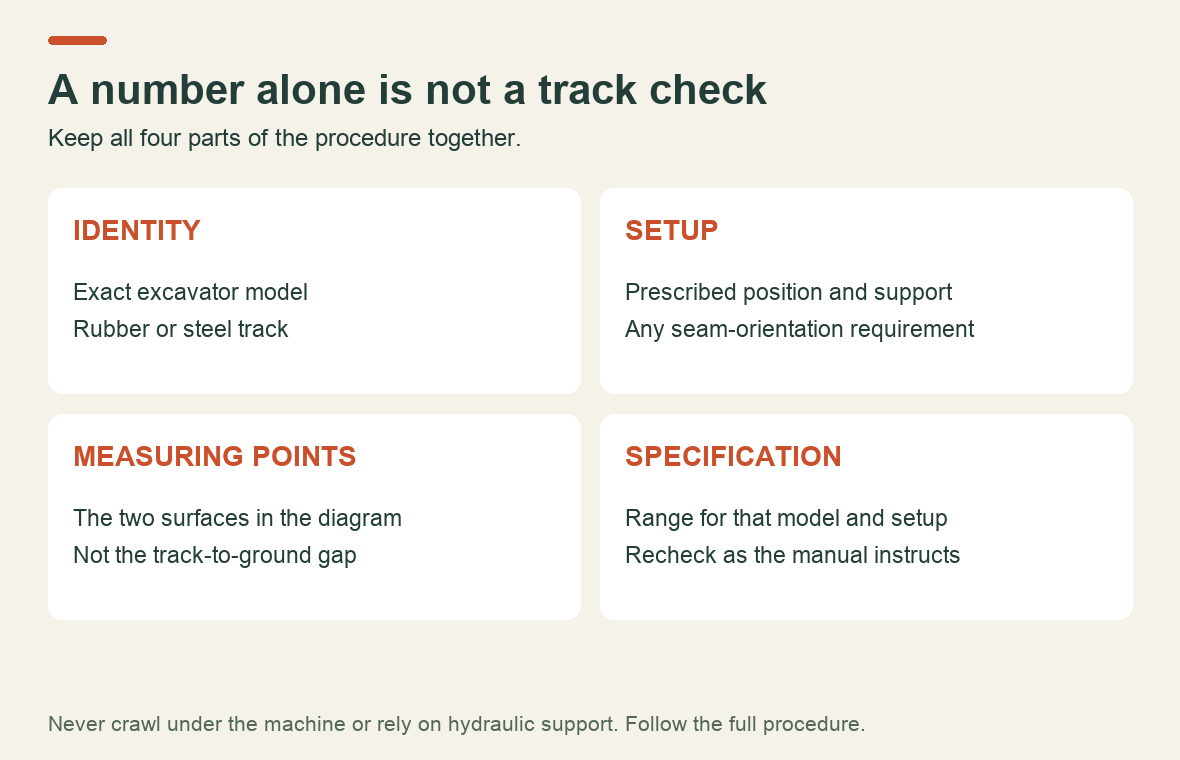
In the Kubota U17-3 operator's manual, Adjustment of Tracks section, the rubber-track example specifies 10–15 mm, approximately 0.4–0.6 in., between the track roller and the inside track surface in the illustrated lifted position. It also requires the seam to be at the top center between idler and sprocket.
Keep those conditions together. Measuring from the tread to the ground, or with the seam in a different position, is not the check described by that manual. The illustration and preparation instructions are part of the specification.
The same section warns against going under the excavator or relying on hydraulic support. It also warns that rapidly or completely loosening the grease nipple can release grease under high pressure. Follow the full support and adjustment procedure; this article is not a lifting or grease-release instruction.
Prepare the check before taking the measurement
Open the track-adjustment section before moving the machine into a service position. Identify the track type, the relevant diagram and any seam or orientation note. Establish how the machine must be secured and supported, where you can safely stand, and what equipment the procedure requires.
If you cannot provide the prescribed setup, have the check performed by a workshop. A quick measurement is not useful if getting it puts someone beneath unsupported equipment.
Inspect for packed material and trapped debris using the manufacturer's cleaning instructions. Camso's winter care guidance for construction tracks emphasizes regular inspection and cleaning before accumulated material freezes. That is particularly relevant when a machine works in wet ground and is parked through a cold night.
Do not compare a reading taken through packed mud with one taken on a clean undercarriage and interpret the difference as wear. First make the conditions comparable. Keep clear of a moving track and never reach into it to dislodge material.
What to write next to the reading
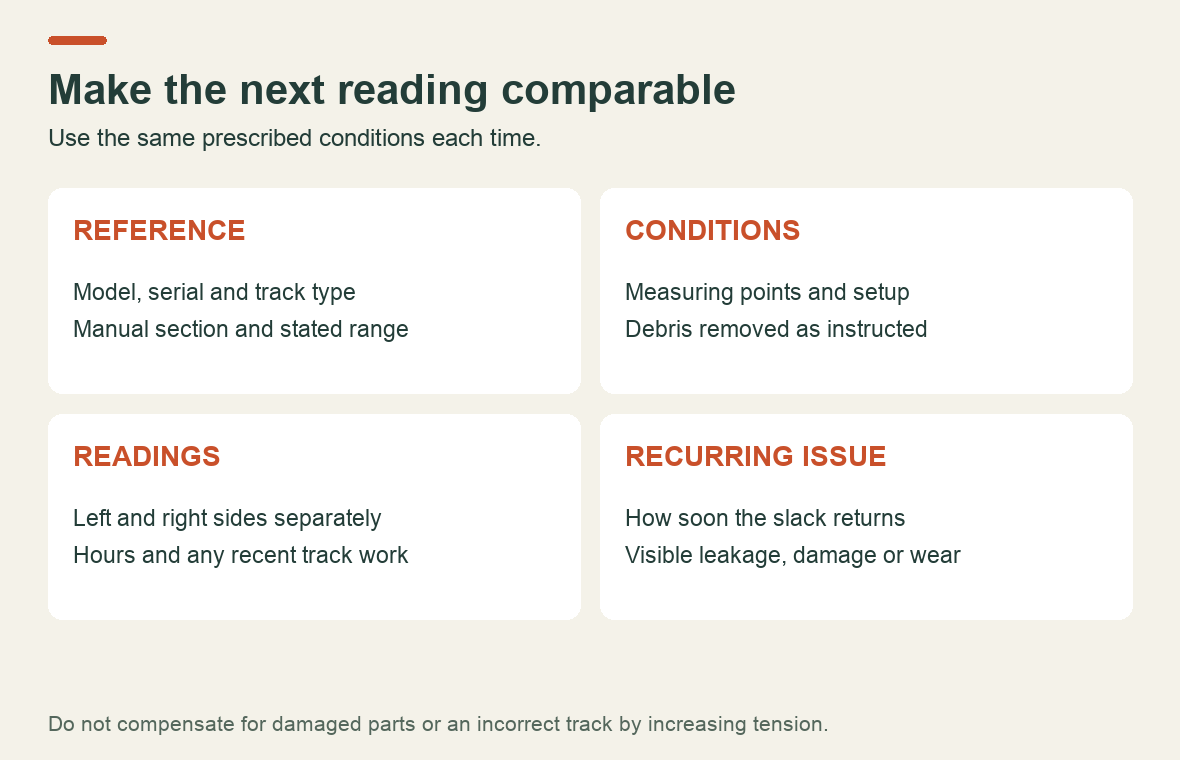
A note saying “left track: 12 mm” leaves too much out. A better record identifies the model, track type, manual section, measuring points and setup, then gives separate readings for each side. A safely taken photograph can show the measuring location without putting hands into a pinch point.
| Record | Why it helps later |
|---|---|
| Model, serial number and track type | Establishes which procedure was used |
| Manual edition and stated range | Keeps the result tied to its reference |
| Setup and measurement location | Makes the next check comparable |
| Left and right readings | Preserves a difference that one average would hide |
| Hours and recent track work | Helps explain when the change began |
Repeat or verify the check as the manual instructs after adjustment. Do not declare it complete solely because the track looks straighter from the cab.
What if a track keeps going loose?
Repeated adjustment is a symptom worth recording. Note whether the change occurs on one side, how soon it returns, and whether you can see grease leakage, track damage or abnormal component wear with the machine safely secured.
Camso's construction-track basics explains the track's internal structure and the importance of identifying the correct replacement. It is useful background when inspecting a worn track, but a wear or fit problem cannot be resolved by choosing an arbitrary tighter setting.
Do not use tension to compensate for an incorrectly sized track or a visibly damaged undercarriage. If a track has come off, is damaged, or will not retain the specified adjustment, stop using the machine until the cause has been assessed. Refitting a track and repairing a tensioner are different jobs from a routine clearance check.
Where the workshop manual helps
The operator's manual supplies the routine check. Workshop documentation becomes useful when the problem involves the adjuster, rollers, idler, sprocket or associated components.
For U17 and U17-3 owners, the Kubota Workshop Manual 97899-61970 listing lets you review the covered systems and procedures. Owners of U35-series machines can review the U35 Workshop Manual 97899-60640, whose published contents include track tension, the grease tension cylinder, rollers and sprocket. Confirm the exact model; U35 is not interchangeable with every U35 suffix.
Keep the chosen manual reference beside the measurement in your service record. At the next inspection, you will know whether the clearance actually changed or whether someone measured a different gap.
Recent Post
-

Why a Kubota Manual May N...
16 Sep, 2026
-

Kubota Tractor Won’t Star...
16 Sep, 2026
-

Kubota DPF Light Flashing...
18 Sep, 2026
-

Kubota Tractor Overheatin...
21 Sep, 2026
-
Kubota Hydraulic Couplers...
22 Sep, 2026
-

Kubota UDT vs Super UDT2:...
23 Sep, 2026
-

Kubota 3-Point Hitch Won'...
24 Sep, 2026
-
Kubota Excavator Track Te...
25 Sep, 2026