Will Rear Tire Chains Fit My Kubota BX23S?
Will Rear Tire Chains Fit My Kubota BX23S?
Will rear tire chains fit a Kubota BX23S with 26×12.00-12 tires? Kubota lists that rear size for turf, bar and industrial tread. A chain advertised for it might wrap around the tire yet put the inside connector too close to a bracket. Before ordering, read both rear sidewalls, identify the tread and measure the free space beside and above each tire. Check with Kubota that rear chains are suitable for your wheel and installed equipment, then use those measurements to compare specific sets. Kubota BX23S rear tire table.
Read the tire that’s on the tractor
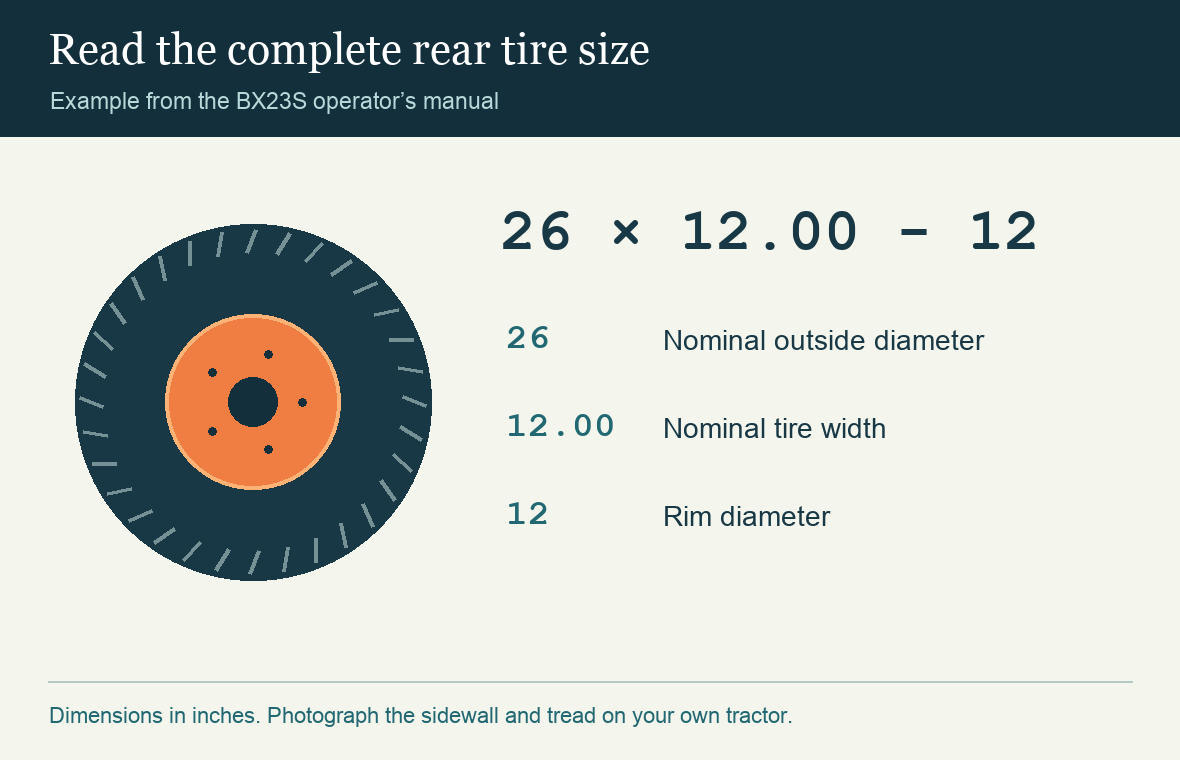
In 26×12.00-12, 26 is the nominal outside diameter in inches, 12.00 is the nominal tire width, and the last 12 is the rim diameter. A listing may shorten that to 26×12-12. Take one photo of the whole sidewall marking, including the tire maker and model, and a second photo across the shoulders so the supplier can see the tread. Check the other rear tire as well, particularly on a used tractor. The owner before you may have replaced one tire more recently than the other. Kubota Canada BX23S specifications.
Why ask for a tread photo when the size is legible? A straight cross chain sits near the surface on a shallow turf tread. On a tire with tall, widely spaced bars, some of that chain can settle into the channels between the bars. A new, deep-lug tire can also need more chain length than a worn tire with the same sidewall marking. If a seller asks for the actual circumference, measure it the way that seller specifies. Multiplying the nominal diameter by pi won’t capture differences in wear or tread profile. TireChain.com fit guidance for deep-lug and worn tires.
Ladder, linked pattern or V-bar for the driveway?
Picture the surface you cross on every trip from the garage. The chain that grips a glazed gravel lane also has to turn on the concrete apron outside the door. The tread pattern, spacing of the cross chains and shape of the metal that touches the ground all affect that choice.
- Turf tires on a paved drive. A plain ladder chain is a sensible comparison point. The cross chains run across the tread like rungs. Two-link spacing puts those rungs closer together than four-link spacing and brings metal into contact with the ground more often. Ask about marking if you have a sealed drive, pavers or a finished garage floor. Even a plain steel set deserves a careful trial on a surface you want to preserve. Example of a 26-12-12 two-link ladder chain.
- Bar or industrial tires with pronounced lugs. Ask the supplier to show how the chain will sit across the lug tops. A connected cross pattern can bridge the gaps where individual ladder rungs tend to settle. Aquiline shows a box pattern for this purpose. Send your tread photo before paying for a set, since the pattern still has to fit inside the wheel opening. Aquiline chain patterns and compact-tractor clearance photo.
- Frequent ice or hardpack. A V-bar adds raised metal edges to bite into ice. Check the route back to the shed before choosing it. The supplier of a 26-12-12 V-bar set specifically calls out the risk of marking asphalt, concrete and pavers. If that last turn crosses a new apron, tell the supplier when asking for alternatives. 26-12-12 V-bar application and surface guidance.
“Two-link” describes the spacing. “V-bar” describes the contact surface. You can buy a two-link V-bar or a two-link plain ladder set in the same nominal size. Compare both descriptions when two product photos look alike.
Measure where the inside connector will pass
Park on firm, level ground, lower the implements, set the parking brake and stop the engine. Take the key with you. Leave the tractor on its wheels and work from outside the wheel well. A flashlight, ruler and phone camera are enough for a first look. Record the smallest gap on each side with the mower or backhoe mounting hardware that will actually be there for winter.
- Inside each rear wheel. From the inner sidewall and shoulder, look for the nearest frame member, bracket or line. Record the distance and the name or photo of the obstruction. Check the area the connector will pass as the wheel turns. A wide gap at one point can hide a tight spot farther around.
- Above the tire. Measure from the tops of the tread blocks to the underside of the fender or the closest overhead obstruction. Measuring from the bottom of a tread groove makes the available space look larger than it is.
- Against the chain maker’s drawing. Ask for the required inner and overhead clearances for the exact part number, including fasteners. Follow the drawing’s measuring points. The thickness of one link leaves out the connector, the way links lie across each other and the space a moving chain needs.
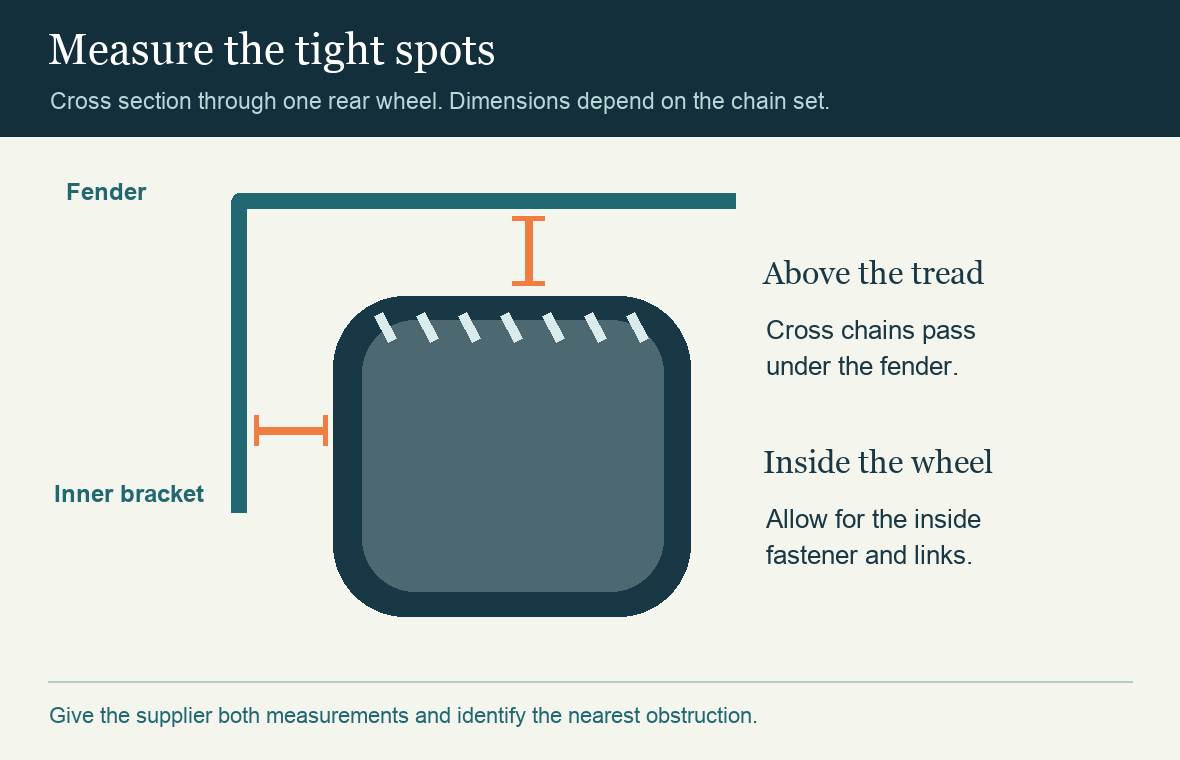
Worked example. Suppose the supplier’s sheet for one candidate set requires 40 mm beside the bare tire and 50 mm above it. You measure 46 mm on the left, 35 mm on the right and 60 mm overhead. The right side is 5 mm short. Averaging the two side measurements would make this look like a fit and conceal the interference. Those figures are an example of the calculation. Use the actual set’s requirements for your purchase, and get a second measurement if the smallest gap is hard to reach.
One tempting fix is to turn the rear wheels around to gain space. The BX23S operator’s manual says the rear tread width is fixed and specifically rules out flipping the rear discs to widen it. A spacer is a separate change to the wheel installation. If a seller proposes one, have Kubota check your exact wheel and attachment configuration before including it in the order. Kubota BX23S rear wheel mounting instructions.
Buying a used pair and doing the first fit
Ask the seller to lay both chains out side by side and photograph their tags, inside connectors and outside fasteners. Count the cross chains on both. A pair shortened to fit another machine may carry the correct original label yet have different usable lengths. A missing cross chain, bent hook or mismatched connector is something to price and resolve before trying the set. If the only evidence is “they came off a BX,” ask which tires were on that tractor.
For a clean test fit, use the maker’s instructions for chain orientation, fasteners, tension and loose ends. With the tractor secured, check how the inside connector sits beside the tight spot you measured. If the stationary fit clears and the manufacturer calls for a short settling run, follow its procedure, park again and recheck both wheels. Stop if you hear a regular tap with each revolution. Look for a shifted cross chain, fresh marks on a bracket or an unsecured tail before using the tractor to clear snow. Chain fitting, tensioners and test-fit guidance.
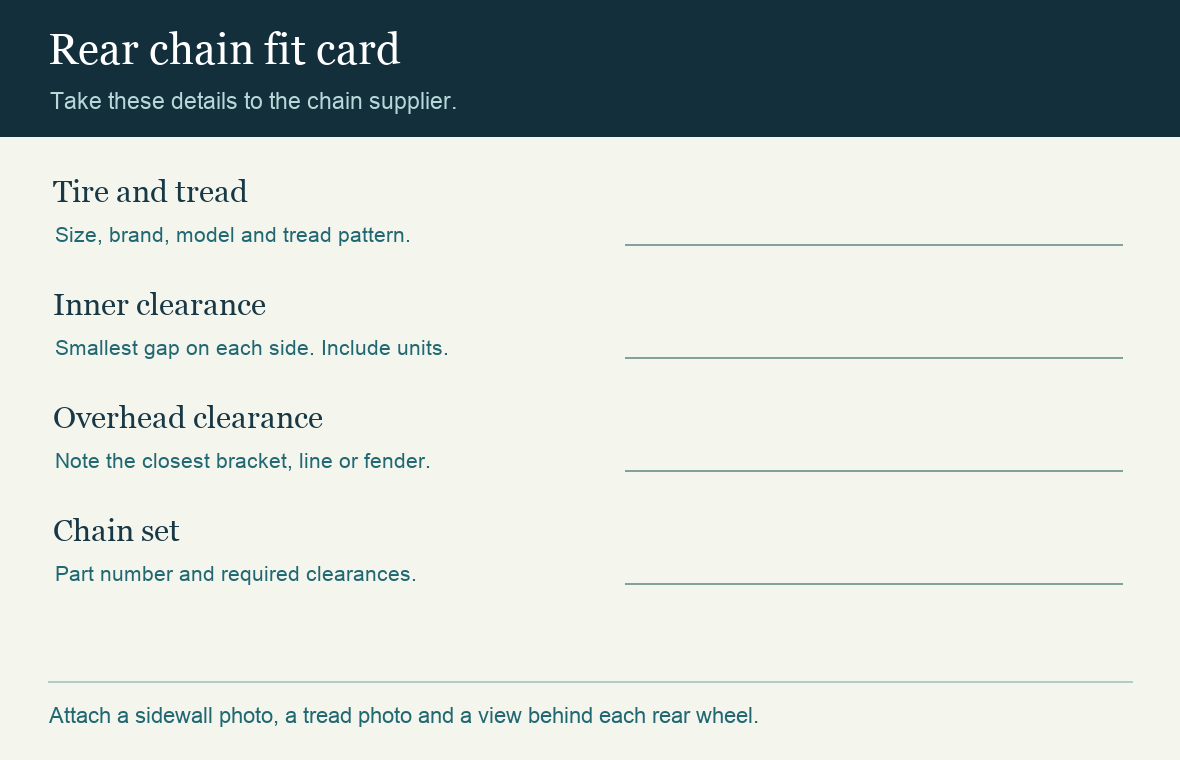
Keep the chain part number, tire photos and measurements with the tractor. When you replace a worn set of tires, those notes tell you what to recheck before the next snowfall. If rubbing has damaged something behind the wheel and a shop needs access, the BX23S workshop manual lists rear-wheel removal on page 231. Kubota BX23S workshop manual 9Y111-16500 on Byte Market.
Recent Post
-
Why a Kubota Manual May N...
16 Sep, 2026
-

Kubota Tractor Won’t Star...
16 Sep, 2026
-

Kubota DPF Light Flashing...
18 Sep, 2026
-
Kubota Tractor Overheatin...
21 Sep, 2026
-
Kubota Hydraulic Couplers...
22 Sep, 2026
-

Kubota UDT vs Super UDT2:...
23 Sep, 2026
-
Kubota 3-Point Hitch Won'...
24 Sep, 2026
-
Kubota Excavator Track Te...
25 Sep, 2026
-
New Holland540 vs 540E PT...
28 Sep, 2026
-
Kubota BX Mower Cutting U...
29 Sep, 2026
-
Kubota Excavator Controls...
30 Sep, 2026
-

New Holland DEF Storage:...
01 Oct, 2026
-
Kubota Air Filter: When t...
02 Oct, 2026
-
Kubota SVL Standard vs Hi...
06 Oct, 2026
-

New Holland Water in Fuel...
07 Oct, 2026
-
Kubota Loader Float: What...
08 Oct, 2026
-
Kubota HST Tractor Won't...
09 Oct, 2026
-

Kubota 50-Hour Service Ch...
12 Oct, 2026
-
Kubota 4WD Won't Disengag...
13 Oct, 2026
-
Kubota KX040-4 Final Driv...
14 Oct, 2026
-
Kubota PTO Won't Engage?...
15 Oct, 2026
-
How to Check Hydraulic Oi...
16 Oct, 2026
-
Kubota Battery Light Stay...
19 Oct, 2026
-
Kubota Ran Out of Diesel?...
20 Oct, 2026
-
Kubota SVL75-3 Lift Capac...
21 Oct, 2026
-

What Coolant Does a Kubot...
22 Oct, 2026
-
Kubota Engine Oil Level R...
23 Oct, 2026
-
Kubota SVL75-2 DPF Light...
26 Oct, 2026
-
Kubota U55-4 Specs: Weigh...
30 Oct, 2026
-
Kubota M7060 Specs: Weigh...
02 Nov, 2026
-
Kubota L2501 Specs: Weigh...
03 Nov, 2026
-

Kubota BX23S Specs: Weigh...
05 Nov, 2026
-

Kubota D1105 Oil Capacity...
06 Nov, 2026
-

Kubota U17 and U17-3 Spec...
09 Nov, 2026
-
Kubota MX5400 vs MX6000:...
11 Nov, 2026
-

Kubota B2601 Specs: Weigh...
12 Nov, 2026
-

Kubota U35-4 Specs: Weigh...
13 Nov, 2026
-
Kubota KX71-3 Specs: Weig...
17 Nov, 2026
-

Kubota B2650 Specs: Cab W...
18 Nov, 2026
-

Kubota L3901 Specs: Weigh...
19 Nov, 2026
-

Kubota BX2380 Snow Blower...
20 Nov, 2026
-
Does My Kubota SVL75-2 Ha...
23 Nov, 2026
-
Will Rear Tire Chains Fit...
25 Nov, 2026